


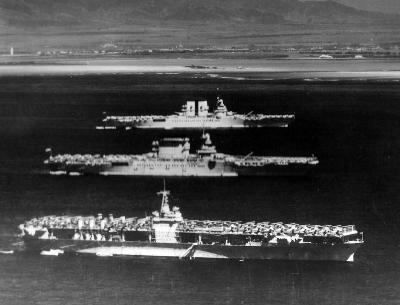
S8 Ep208: SHOW 12-17-25 THE SHOW BEGINS WITH DOUBTS ABOUT THE US CONFLICT WITH VENEZUELA... 1926 USS OMAHA IN THE PANAMA CANAL. Colonel Jeff McCausland discusses the US "blockade" of sanctioned Venezuelan oil tankers and the potential for escalation into a regiona
Update: 2025-12-18
Description
SHOW
12-17-25
THE SHOW BEGINS WITH DOUBTS ABOUT THE US CONFLICT WITH VENEZUELA...
1926 USS OMAHA IN THE PANAMA CANAL.
12-17-25
THE SHOW BEGINS WITH DOUBTS ABOUT THE US CONFLICT WITH VENEZUELA...
1926 USS OMAHA IN THE PANAMA CANAL.
Colonel Jeff McCausland discusses the US "blockade" of sanctioned Venezuelan oil tankers and the potential for escalation into a regional conflict involving Colombia. He also analyzes the Pentagon's refusal to release videos of destroyed drug boats, suggesting possible war crime concerns, and notes stalled Ukraine negotiations.
Colonel McCausland reports on NATO's eastern flank "digging in," with Baltic states building defensive bunkers and Germany significantly increasing military spending. He highlights a divergence where European allies prepare for existential Russian threats while US leadership may prioritize "strategic stability" and economic cooperation with Moscow.
General Blaine Holt warns that integrating Artificial Intelligence into military command increases the risks of deliberate, inadvertent, and accidental escalation. He argues that while AI accelerates decision-making, it lacks human judgment, potentially leading to catastrophic miscalculations if adversaries rely on algorithms during crises.
General Holt explains that AI models in war games demonstrate a bias toward violent escalation, often prioritizing "winning" over negotiation, which leads to nuclear conflict. He emphasizes the necessity of keeping humans in the loop and maintaining direct communications between rival nations to prevent automated catastrophe.
Simon Constable reports from France on high copper prices and slowing European energy demand. He describes protests by French farmers burning hay to oppose government orders to cull cattle exposed to disease and notes a significant rise in electric vehicle sales across the European Union.
Simon Constable discusses the political troubles of UK Prime Minister Keir Starmer and the suspension of a US-UK tech deal due to clashes over AI regulation. He explains that Britain's "Online Safety Act" aims to tax and regulate tech giants, which threatens to stifle American AI companies operating there.
Bob Zimmerman highlights a record-breaking year with over 300 global rocket launches, driven largely by private enterprise competition. He notes that Amazon was forced to contract SpaceX for satellite launches due to delays from rivals like Blue Origin and reports on safety concerns involving Russian launch pad negligence.
Bob Zimmerman reports on the success of commercial space station company Vast and orbital tug tests that outperformed government efforts. Conversely, he details problems with NASA's Maven orbiter at Mars, which has lost communication, potentially jeopardizing data relays for surface rovers.
David Shedd critiques the bipartisan failure of allowing China into the World Trade Organization in 2001, which was based on the false assumption that economic engagement would lead to democratization. Instead, this decision facilitated a massive transfer of intellectual property, fueling China's rise as a predatory economic rival.
David Shedd explains how China's Ministry of State Security operates as a massive intelligence entity combining the functions of the CIA, FBI, and NSA. He traces this economic espionage to Deng Xiaoping's 1984 strategy, noting that Chinese officers view theft as repayment for past Western oppression.
David Shedd details espionage cases, including an Apple engineer stealing "Project Titan" car schematics for a Chinese competitor. He also describes a Google employee who stole AI data while secretly working for a Chinese firm, highlighting how corporate greed and weak internal security enable intellectual property theft.
David Shedd outlines strategies to counter Chinese espionage, advocating for "partial decoupling" to protect critical technologies like semiconductors and AI. He argues for modernizing legal deterrence to prosecute theft effectively and warns that Chinese platforms like DeepSeek harvest user data to advance their "Great Heist" of American wealth.
Nury Turkel discusses the plight of Guan Hang, a whistleblower facing deportation from the US despite documenting Uyghur concentration camps. Turkel criticizes the inconsistent enforcement of forced labor laws and highlights new evidence linking Uyghur slave labor to the excavation and processing of critical minerals.
Rebecca Grant argues against the planned retirement of the USS Nimitz in 2026, suggesting it should be kept in reserve given delays in new Ford-class carriers. Despite the ship's age, Grant asserts that retaining the carrier offers crucial strategic depth against threats like China's PLA Navy.
Rick Fisher analyzes the emerging race to build AI data centers in low Earth orbit, noting advantages like natural cooling and zero real estate costs. While Elon Musk's Starlink positions the US well, Fisher warns that China has detailed plans to use space-based data centers to support expansion into the solar system.
Alan Tonelson evaluates China's economic strengths, acknowledging their dominance in rare earth processing and solar panels, often achieved through subsidies. He argues that China's heavy investment in industrial robots attempts to offset a looming demographic crash, while questioning the true market demand for their subsidized electric vehicles.

Comments
In Channel















Download from Google Play

Download from App Store
 United States
00:00
00:00
x

